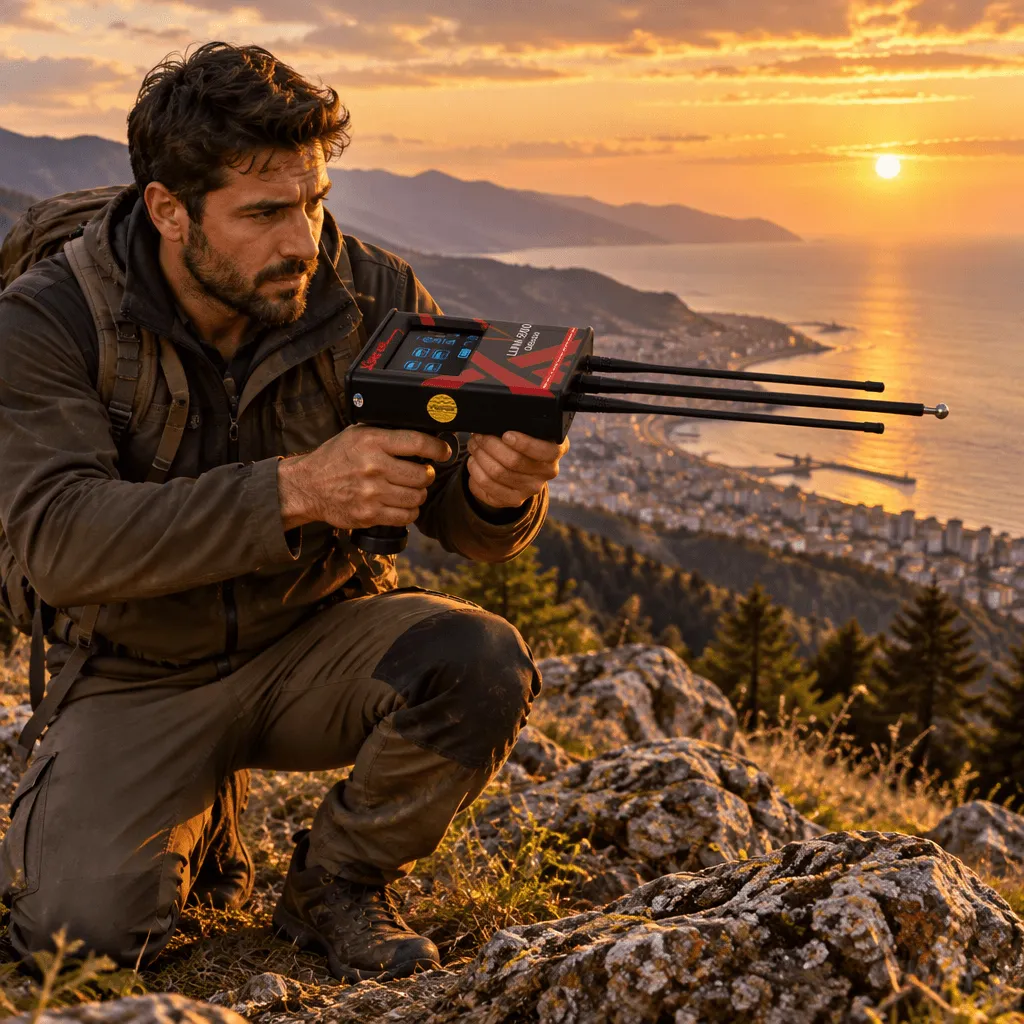
Buying a metal detector in 2026 is less about brand names and more about matching three things: the target you want to find, the ground you will search, and the way you want to read the signal. A machine that is perfect for coins in soft pasture can be the wrong tool for deep relics in mineralized soil, and the most expensive model is rarely the best first detector. This guide follows the order that actually matters, then shows where the Xsense Luna 5000, Xenon i2, X1, X2 and X4 Pro fit.
Quick answer: the five decisions that matter
- Target: coins and jewellery, natural gold, deep relics, cavities, or water.
- Ground: mild farm soil, highly mineralized ground, wet sand, or rocky highland.
- Depth: a realistic depth for your target, not a brochure number.
- Skill: a beginner needs presets; a professional needs control.
- Support: warranty, spare parts and a dealer who answers.
Five questions to answer before you pay
1. What exactly are you looking for?
Coins and small relics reward fast target separation. Natural gold rewards sensitivity to small, low-conductivity targets in mineralized ground. Cavities, tunnels and buried rooms need imaging rather than a beep. Water detection is a different task again. Write your main target down before you open a product page; it removes most of the confusion.
2. What is under your feet?
Highly mineralized soil, hot rocks and wet salt sand all reduce usable depth. A detector that is stable on a test bench can become noisy on real ground. Ask what ground balance and filtering the device offers, and whether the seller has used it in your region.
3. How deep do you honestly need to go?
Depth depends on target size, target orientation, soil and settings. A large object at two metres is a different problem from a single coin at thirty centimetres. Buy for the targets you will meet most often, not for the biggest claim on a poster.
4. How much experience do you have?
A first detector should be easy to switch on and understand. A professional device with dozens of parameters is a poor teacher. If you are new, choose presets and a clear screen; you can add complexity later.
5. Who will service the device?
Check the warranty length, the spare-parts path and the response time of the support team. A cheap device with no service is expensive the first time it fails.
Realistic budget bands
| Band | What you actually get | Who it suits |
|---|---|---|
| Entry | A reliable sensor, preset modes, a readable screen and 8 to 12 hours of battery. | First detector, coins, shallow relics, weekend use. |
| Mid | More stable processing, better ground handling, app connectivity and longer battery. | Regular hunters who want 3D visualisation and fewer false signals. |
| Professional | Dual sensors, a dedicated tablet, discrimination charts, a rugged case and multi-year warranty. | Deep targets, large surveys and commercial work. |
Prices in Turkey move with the exchange rate. Confirm the current price and what is inside the box before you compare two offers.
Nine specifications that actually change results
| Specification | Why it matters | What to check |
|---|---|---|
| Sensor type | Sets the depth and target class the device is built for. | Gradiometer, dual sensor or long-range antenna. |
| Processing | Separates a real target from ground noise. | Processor speed and filtering options. |
| Ground balance | Keeps depth in mineralized soil. | Automatic, manual or tracking. |
| Discrimination | Reduces iron and trash digging. | A chart or a numeric indicator. |
| Sensor size | Small sensors separate targets; large ones cover ground. | What ships in the box. |
| Battery | Decides how long a field day lasts. | Real hours and charging time. |
| Display | Turns a signal into a decision. | Resolution, brightness and touch. |
| Software | Adds 3D views and reports. | Android and Windows support. |
| Warranty | Protects the investment. | Years, coverage and service location. |
Advertised depth is not field depth
Every manufacturer tests depth in controlled conditions. Real ground adds minerals, moisture, rocks and interference. A detector that reports three metres on a large test object may report thirty centimetres on a small coin in hot soil. Read our full guide to metal detector depth in Turkey before you compare numbers.
Choose the technology family before the model
| Family | What it does | Limits |
|---|---|---|
| Ionic and long-range | Directional scanning across open ground. | Needs stable terrain and practice. |
| Multi-mode long-range | Metals, cavities, gemstones and water in one unit. | Interpretation still depends on the operator. |
| Handheld 3D scanner | Builds a subsurface image before digging. | Requires a slow, steady scan. |
| Professional dual-sensor scanner | Depth plus fast wide coverage. | Higher price and a longer learning curve. |
Our comparison of types of metal detectors explains each family in detail.
Genuine or counterfeit: seven checks
- Serial number: confirm it on the device, the box and the warranty card.
- App authentication: the X3D app verifies a genuine Xsense device.
- Warranty card: must carry the manufacturer name, address and contact details.
- Authorised seller: ask for the dealer certificate or a direct confirmation.
- Firmware: a genuine unit accepts official updates.
- Packaging: print quality, foam cutouts and manuals should match the model.
- Price sanity: a new unit far below the market is a warning, not a bargain.
Warranty, service and total cost of ownership
The sticker price is only the first payment. Add a pinpointer, a spare battery, a protective case, travel and the hours you spend learning. Then compare warranty: one year of replacement on the Luna 5000, three years plus lifetime support on the X1, X2 and X4 Pro. A longer warranty is real value when the device earns money.
The Xsense range at a glance
| Model | Best for | Key specifications | Battery | Warranty |
|---|---|---|---|---|
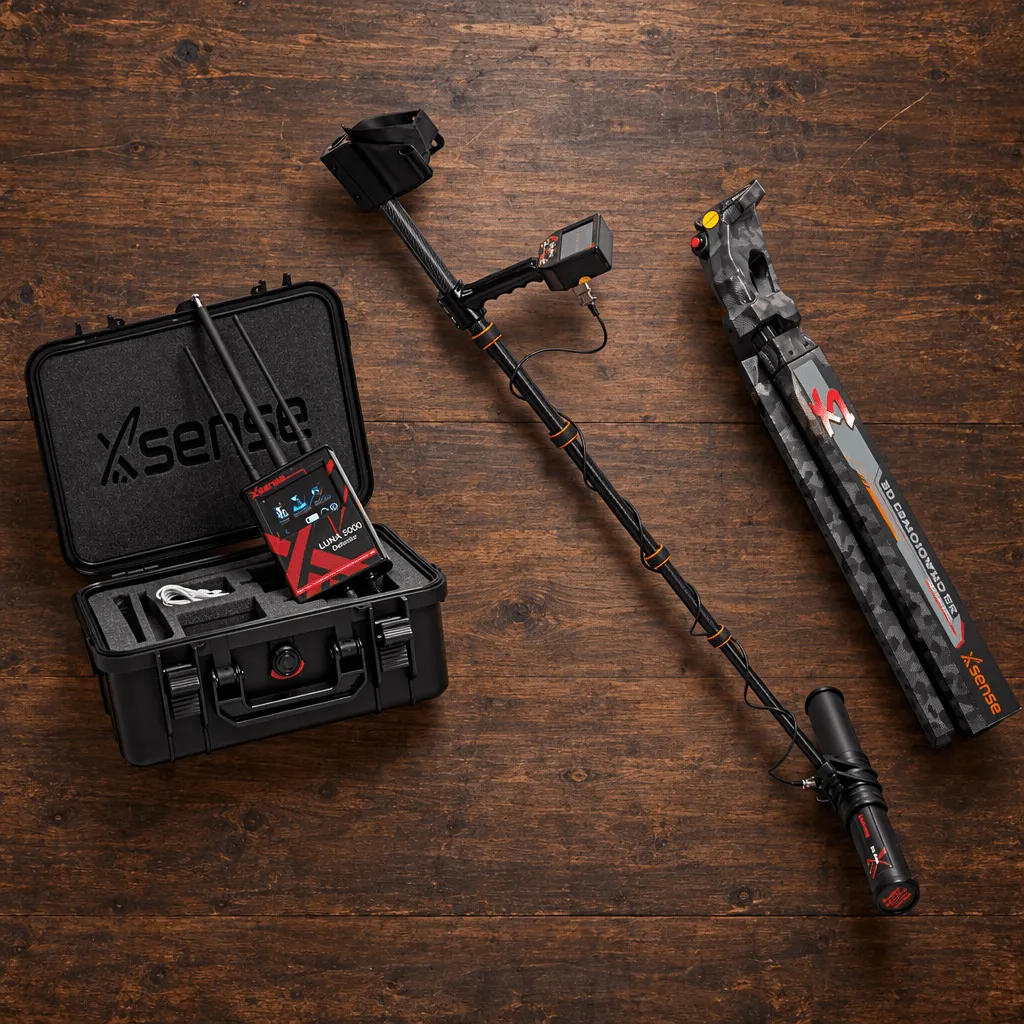
| Luna 5000 | Long-range search, multiple materials | 8 modes, 4 confirmation frequencies, 1000 m radius, colour touchscreen | 10 h | 1 year |
| Xenon i2 | Ionic directional detection | Radar and O-Scope systems, colour touchscreen | 10 h | Manufacturer warranty |
| X1 | Deep targets, ergonomics | Super Gradiometer sensor, OLED, Live and Manual scan | Up to 14 h | 3 years |
| X2 | Balance of price and imaging | Dual super sensors, gyroscope, OLED, X3D app | 20 h | 3 years |
| X4 Pro | Flagship depth and speed | Dual sensors, dedicated tablet, 2D screen, discrimination chart | 16 h | 3 years |
Three buyer scenarios
Your first detector
The Luna 5000 is the easiest entry point. Eight presets, four confirmation frequencies, a 1000 metre search radius and a colour touchscreen give a beginner useful results without a long setup.
Deep relics and natural gold
The X1 pairs a Super Gradiometer sensor with a telescopic shaft and 14 hours of battery. Step up to the X4 Pro when you need dual sensors and a tablet in the field.
Professional surveys
The X4 Pro is built for paid work: vertical sensor for depth, horizontal sensor for speed, on-device 2D scanning and the X3D app for reports.
Compare the full range: X4 Pro, X2, X1, Luna 5000 and Xenon i2.
Five mistakes that cost money
- Buying for the biggest depth claim instead of your real target.
- Ignoring ground conditions and local experience.
- Skipping the authenticity and warranty checks.
- Forgetting accessories, training and travel in the budget.
- Choosing a complex device before learning the basics.
Frequently asked questions
How much should I spend on a first metal detector?
Plan for the entry or lower mid band and keep part of the budget for a pinpointer, a case and travel. The Luna 5000 sits at the accessible end of the Xsense range.
Is a more expensive detector always deeper?
No. Depth depends on target size, soil and settings. A well matched mid-range device often beats a poorly chosen flagship in the wrong ground.
How do I know an Xsense device is genuine?
Check the serial number, authenticate the device in the X3D app and confirm the warranty card and the seller.
Do I need a 3D scanner or a standard detector?
If you need to see shape and depth before digging, choose imaging. If you mainly need fast target recovery, a long-range or standard detector is enough.
What warranty comes with Xsense detectors?
The Luna 5000 carries a one year replacement warranty. The X1, X2 and X4 Pro carry three years plus lifetime support.
Can I buy from outside Turkey?
Yes. Xsense ships worldwide. Contact the team for current stock, shipping cost and delivery time to your country.
The bottom line
Define the target, read the ground, set a realistic budget and verify the seller. Then choose the model that matches the work. The right detector is the one you understand, trust and use often.
Need help choosing? Talk to an Xsense specialist or open the 2026 price guide.
Results depend on soil, target, settings and operator skill. A detector does not guarantee a find. Always follow the heritage and treasure laws of your country and obtain the required permits before searching or digging.
Reviewed by the Xsense Detectors engineering team, Trabzon, Turkey. Last updated: 1 November 2026.