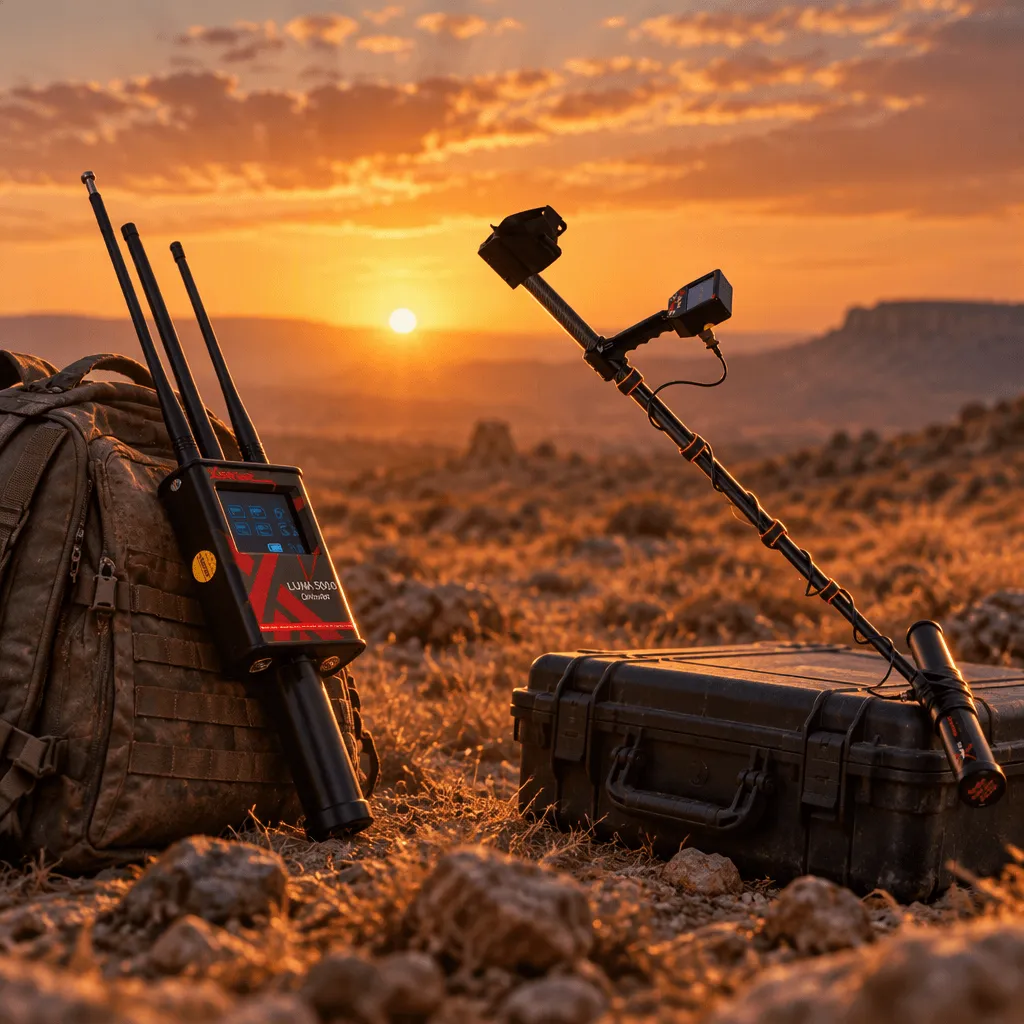
Metal detector prices look chaotic from the outside. Two devices with similar screens can differ by a factor of four, and two sellers can quote very different numbers for the same model. The difference is not random. It comes from seven measurable decisions: sensor architecture, processing, software, power, build quality, included accessories, and the service network behind the product. Once you can see those seven, the price stops being a mystery and becomes a comparison.
Quick answer: four things drive the number
- Hardware: one sensor or two, gradiometer or antenna, processor speed.
- Software: a real analysis app with updates, or a fixed menu.
- Support: warranty years, spare parts and local service.
- Market: exchange rate, customs, dealer margin and shipping.
Why the same model costs different amounts in different countries
A detector is an imported electronic instrument in most markets. The local price includes the manufacturer price, freight, customs, tax, dealer margin, warranty reserve and currency risk. In Turkey, Iran and the Gulf, exchange-rate movement alone can change a shelf price within weeks. That is why a responsible seller publishes the current price on the product page and confirms the landed cost before payment, instead of promising a number that will be wrong next month.
The seven factors that actually set the cost
1. Sensor architecture
A single sensor is cheaper to build than a dual-sensor system. A Super Gradiometer pair, as used in the X1, X2 and X4 Pro, needs matched components and careful calibration. The X4 Pro adds a vertical sensor for depth and a horizontal sensor for speed. That hardware is the largest single line in the price.
2. Processing and filtering
Raw signals are noisy. A fast processor with real filtering separates a target from ground minerals and electrical interference. Cheap devices cut this stage first, which is why they lose depth in real soil while looking fine on a test bench.
3. Software and the app ecosystem
A detector that only beeps is a sensor. A detector that produces a 3D model is a system. The X3D app, the Live and Manual scan modes and the reporting tools are years of development, and they are included in the price of every Xsense device.
4. Battery and power design
Battery capacity is not only about hours. It affects weight, heat, charging time and the quality of the electronics. The range runs from 10 hours on the Luna 5000 and Xenon i2 to 20 hours on the X2, with Type-C charging across the lineup.
5. Build quality and sealing
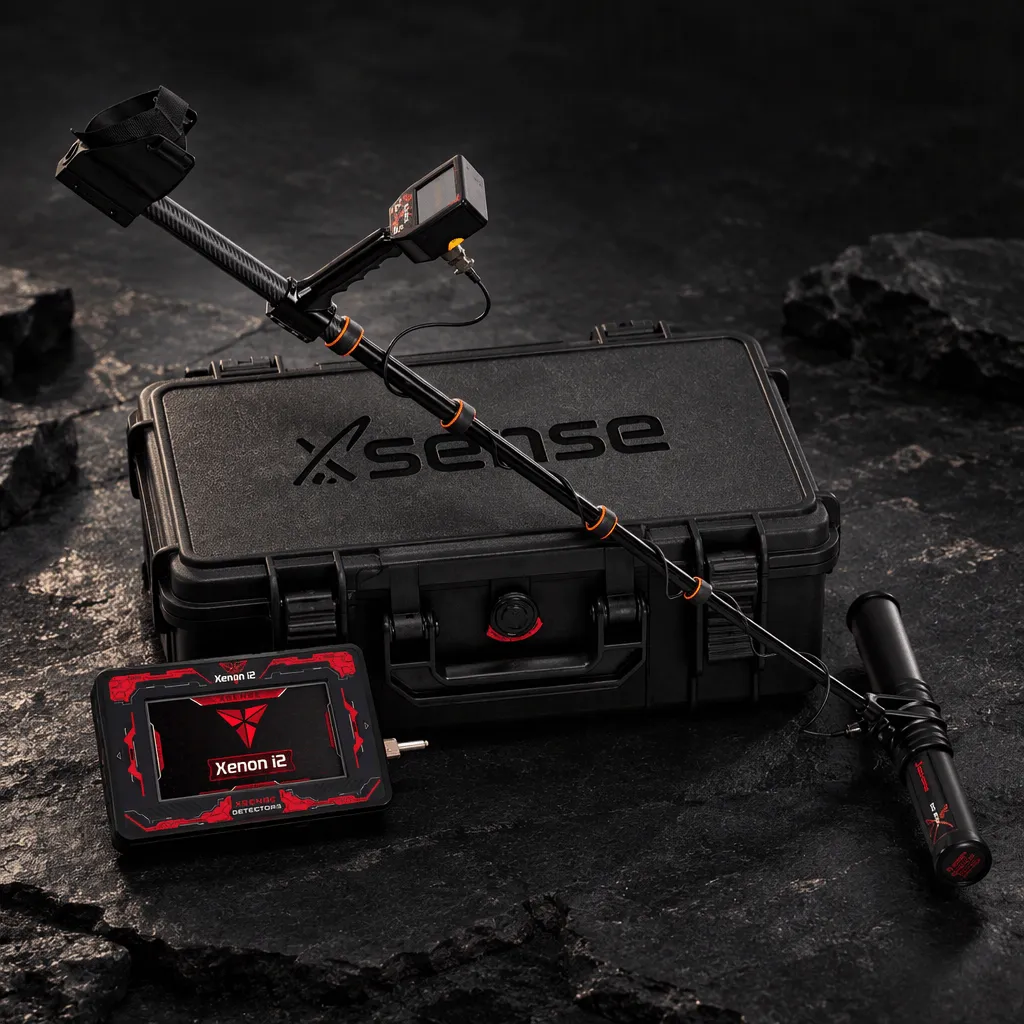
A device used in dust, rain and rocky ground needs sealed connectors, a rigid shaft and a case that survives transport. The X4 Pro ships in a rugged waterproof case for exactly this reason.
6. Included accessories
Compare boxes, not headlines. A tablet, a hard case, a charger, a spare battery or a second sensor can add a large amount to the real value. A cheaper headline price often hides a shorter accessory list.
7. Warranty and service network
Three years of support is a cost the seller carries. The X1, X2 and X4 Pro include three years plus lifetime support; the Luna 5000 carries a one year replacement warranty. A device with no service path is not cheaper, it is simply uninsured.
Realistic budget bands in 2026
| Band | What the money buys | Typical use |
|---|---|---|
| Entry | One proven platform, presets, a colour screen, about 10 hours of battery. | First detector, coins, shallow relics, learning the field. |
| Mid | Better sensors, longer battery, app connectivity and a multi-year warranty. | Regular hunting, 3D visualisation, mixed terrain. |
| Professional | Dual sensors, a dedicated tablet, discrimination tools, a rugged case and commercial-grade support. | Deep targets, large surveys, paid work. |
Current Xsense list prices run from 29,000 TRY for the Luna 5000 to 119,000 TRY for the X4 Pro, with the Xenon i2 at 44,000, the X1 at 54,000 and the X2 at 59,000. Always confirm the current figure on the product page or with the sales team before you compare offers.
Total cost of ownership, not sticker price
Add the accessories you will actually use, the learning time, travel to sites, battery replacement and eventual service. Then subtract the resale value. A well supported device with a clear model name holds value; an unknown clone does not. On a three year horizon the difference in total cost is often larger than the difference in the first payment.
Why the cheapest option is usually the most expensive
- No serial number and no way to verify authenticity.
- No firmware updates, so performance never improves.
- No spare parts, so one broken connector ends the device.
- No warranty card, so the seller disappears after the sale.
- No resale market, so the money is locked in.
What is inside the Xsense box
| Model | Sensors | Battery | Warranty | Notable inclusion |
|---|---|---|---|---|
| Luna 5000 | Long-range antenna system | 10 h | 1 year | 8 modes and 4 confirmation frequencies |
| Xenon i2 | Ionic detection with Radar and O-Scope | 10 h | Manufacturer warranty | Colour touchscreen |
| X1 | Super Gradiometer | Up to 14 h | 3 years | OLED and telescopic shaft |
| X2 | Dual super sensors | 20 h | 3 years | Gyroscope stabilisation |
| X4 Pro | Dual sensors, vertical and horizontal | 16 h | 3 years | Dedicated tablet, 2D screen, discrimination chart |
How to check whether a price is fair
- Compare the same configuration: model, sensors, battery, case and warranty years.
- Ask what is in the box: tablet, charger, spare parts, training.
- Verify the warranty in writing: years, coverage and service location.
- Check authenticity: serial number and X3D app authentication.
- Add shipping and customs: the landed cost is the real price.
- Compare support: response time matters more than a small discount.
Five signals of a price scam
- A new unit far below every authorised seller.
- No serial number, or a number that does not match the box.
- Pressure to pay outside a traceable channel.
- No warranty card and no manufacturer contact.
- Photos that cannot be matched to the exact model you will receive.
Frequently asked questions
Why is the X4 Pro more expensive than the Luna 5000?
It carries two matched sensors, a dedicated tablet, an on-device 2D screen, a discrimination chart, a rugged case and a three year warranty. The Luna 5000 is a long-range platform with a different job.
Is a higher price always better performance?
No. Performance depends on matching the device to the soil and target. A mid-range model chosen correctly can outperform a flagship chosen badly.
Do prices include shipping and customs?
It depends on the seller and the destination. Always ask for the landed cost before payment, especially for cross-border orders.
Can I pay in instalments?
Payment options depend on the market and the dealer. Ask the sales team for the current options in your country.
How often do prices change?
In markets exposed to currency movement, list prices can change within weeks. The product page shows the current figure.
What warranty do I get?
The Luna 5000 carries a one year replacement warranty. The X1, X2 and X4 Pro carry three years plus lifetime support. Full terms are on the warranty page.
The bottom line
Judge a price by what is inside the box, what happens after the sale and what the device can actually do in your ground. A fair price is the one you can verify, not the lowest number you can find.
Compare the range: buying guide, detector types, best detectors in Turkey, or request a current quote.
Prices and specifications change. Confirm the current figure and the included items before payment. Results depend on soil, target, settings and operator skill.
Reviewed by the Xsense Detectors engineering team, Trabzon, Turkey. Last updated: 1 November 2026.